
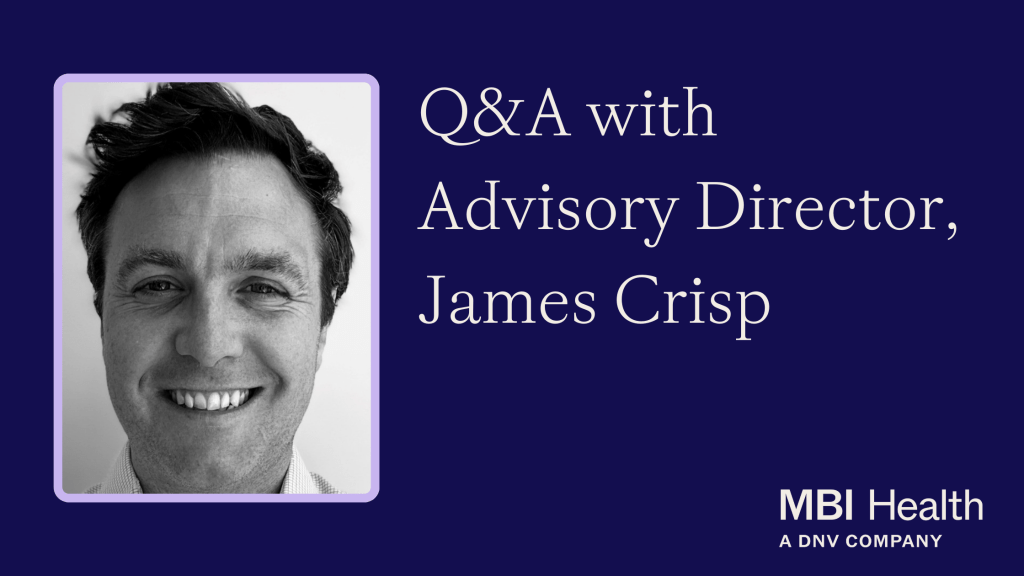
What brought you to MBI, and what is your focus in the advisory team?
What brought me to MBI was recognising that they are a market leader in elective recovery and are experts in making services run safer, smarter, and more efficiently. The combination of operational expertise, technology, and being part of a small organisation with the opportunity to build what I envision for the future was really attractive.
My focus is NHS productivity. I’ve had operational roles for over seven years, most recently four years as Deputy Operations Director in a surgical division, taking services from a COVID standstill back to delivering on constitutional standards. That builds on roles I’ve had optimising cancer pathways at Lewisham and Greenwich, theatre management at Guy’s and St Thomas’, and working on one of the first GIRFT hot–cold splits in orthopaedics – all on top of a consultancy background.
What experiences or turning points lead to your current role at MBI?
I’ve always wanted to be close to the frontline, because that’s where you see the direct impact of your work – how quickly someone gets a first appointment, how you respond when their experience isn’t good, how you build the capacity and capability of the team.
Consultancy gave me national and regional exposure, but I didn’t feel close enough to the frontline to understand whether my work was genuinely making a difference. NHS operational roles showed me clearly what does and doesn’t work.
What system transformation area do you personally feel most passionately about?
The under-recognition of skilled operational managers and administrators. Research shows patients’ experience is driven more by operational aspects of a pathway than by the clinician they see. Behind every appointment are 10–15 operational steps – booking, navigation, calls, letters – yet this workforce is the first to be cut. When you cut the engine room, admin work shifts to clinicians, reducing the care they can deliver.
Whenever I work with an NHS clinical service, I focus on three key areas:
- Operational excellence – are the teams using the tools and capacity they have and getting the basics right?
- Demand–capacity balance – services can be working as hard as they can, but without adequate capacity, the waiting list will always grow. Resolving this imbalance is core MBI territory.
- Pathway optimisation – not every patient needs a first appointment with a consultant; effective patient triage can reduce waits and clinical risk.
What are the MBI advisory teams’ biggest strengths?
Experience. Every member of the team has run NHS services. We bring decades of subject-matter expertise. We have the scars that show what works and what doesn’t!
We are also clear about what we do and what we don’t do. Combining operational expertise with LUNA’s technology gives us a powerful ability to surface themes, trends, and insights for services. This then allows us to focus our delivery capacity on what will really make the step change difference in service performance. That combination is a significant differentiator.
What motivates you about advisory work?
Progress, process, and people.
Seeing demonstrable change in KPIs, how quickly and safely patients get care, how effectively taxpayers’ money is used.
I also love process – things working efficiently with no waste or rework. I enjoy identifying bottlenecks and inefficiencies and bringing my experience to help teams solve them. I also like being an impartial voice and confidant, someone people can talk to about difficult operational challenges.
And ultimately, it comes down to people: developing skills, resilience, and supporting teams in tough roles.
What’s something that people probably don’t know about your work?
That the value isn’t in the tools, the swim lanes or PowerPoints, but in the glue: the coordination, the skilled capacity, and the ability to move quickly across organisational boundaries and politics to get things done.
Our job is synthesising broad, messy information into something clear and actionable. That’s an art form, but it’s often misunderstood.
Are there any recent announcements or events that you think are especially relevant to the work you and MBI are focused on?
The recently published report by the UK Parliament Public Accounts Committee felt particularly pertinent. It said: “despite NHSE spending £3.24bn on transforming diagnostic and surgical services, it has now missed its recovery targets by significant margins, with too many people still waiting too long for tests and treatment.” I feel often there is too much focus on delivering ambitious transformation, when more time and resources should be spent on getting the basics right first.
In general, whenever there is a new NHS policy announcement, I’m always asking: Great – but how will you actually do it? What changes? What’s the incentive mechanism? Whether it’s achieving greater value for money, delivering the ‘Left Shift’, or reducing the waiting list, my instinct is to move from policy to practical delivery.
I am also keeping an eye on the Health Foundation’s NHS Productivity Commission and other NHS productivity related research. My reaction is always: Does this change my approach to delivering value for clients? How would I help people translate these insights into real action?